


Credit:
NASA
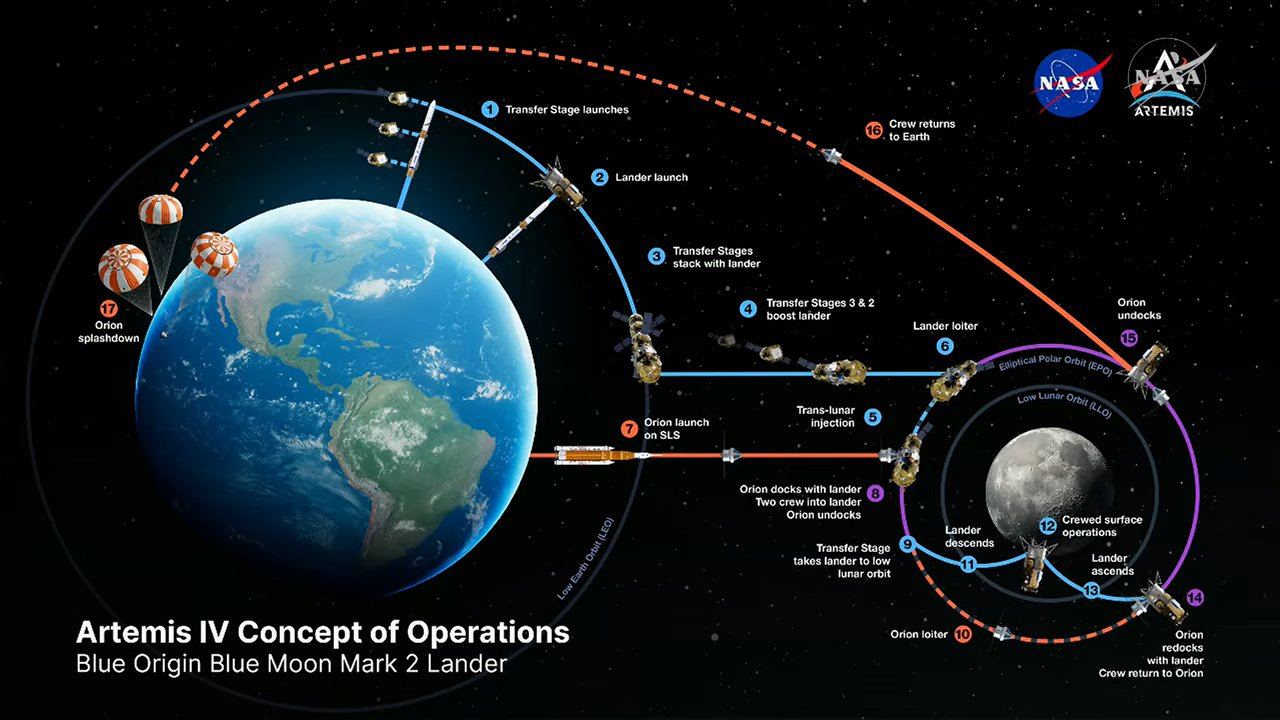
Conceptual operations of the Blue Moon lunar lander.
Credit: NASA
The recent chart released by NASA illustrates the planned docking of the Orion spacecraft with the Blue Moon lunar lander, positioned in an elliptical orbit approximately 8,500 km above the lunar surface. Notably, NASA is also exploring the feasibility of docking in a low lunar orbit.
Jeremy Parsons, manager of the Artemis Program at NASA, noted that achieving a low lunar orbit—just a few hundred kilometers above the Moon—would significantly minimize the fuel required by Blue Moon to transport astronauts to the lunar surface and back to the spacecraft. The saved mass could be repurposed for other uses on the vehicle, enhancing mission efficiency. Moreover, this lower orbit would facilitate more frequent and quicker lift-offs from the Moon’s surface, simplifying aspects of lunar landings for Blue Origin.
Extended Centaur Development
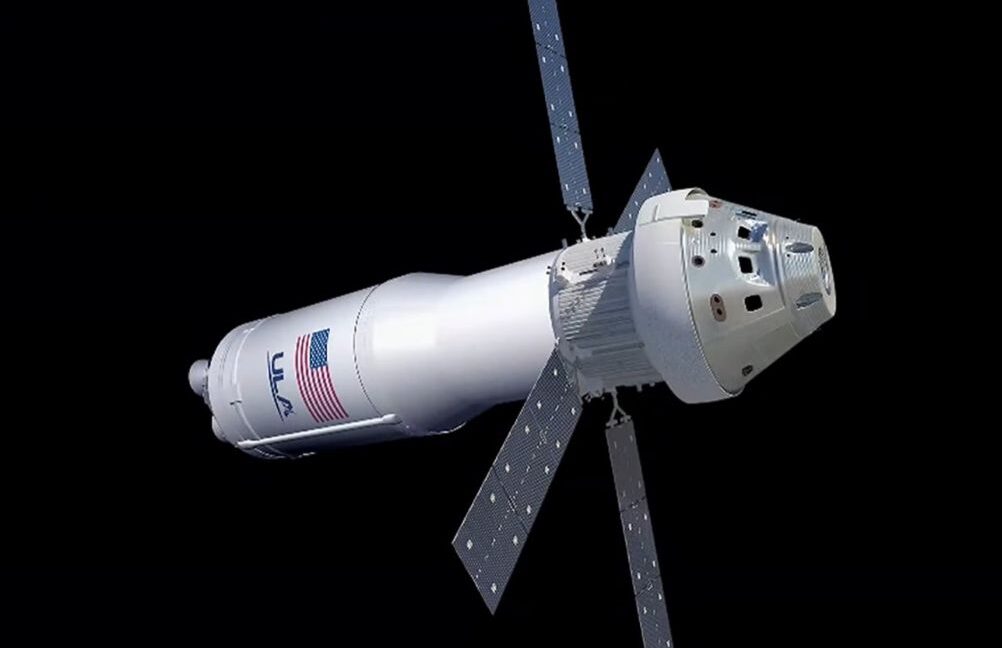
In an exciting announcement, NASA disclosed its collaboration with United Launch Alliance to engineer an “extended” variant of the Centaur V upper stage. This innovation will complement the core stage of the Space Launch System, enabling the Orion spacecraft to attain a low lunar orbit.
This advance is significant, as it addresses a long-standing challenge for NASA: the limitations of Orion‘s underperforming Service Module, which has hindered its ability to launch from Earth, reach low lunar orbit, and ultimately return safely to Earth. Historically, solutions to this issue were either inconvenient or overlooked.
Addressing this problem, Isaacman remarked that achieving a low lunar orbit is paramount for resolving pre-existing propulsion and spacecraft integration issues. He added that it had been too long since these challenges were confronted head-on.
Previously, NASA relied on alternative methods, such as the Lunar Gateway, which was established in a near-rectilinear halo orbit accessible by Orion. This approach placed the responsibility of reaching the lunar surface on the lunar landers and the companies developing them.
In light of the pressing timeline, NASA is focused on supporting lunar lander companies, as highlighted by Isaacman. He stated that the agency is actively engaging with partners to understand their progress and challenges and intended to provide assistance where feasible. According to him, enhancing the proximity of Orion to the Moon could significantly alleviate difficulties faced by landing partners.
Editor’s Take
This development is crucial as it reshapes the trajectory of lunar missions, potentially enabling higher efficiency in astronaut landings. By addressing long-standing propulsion issues, NASA is reinforcing its commitment to sustainable lunar exploration. This advancement holds promise for future missions and partnerships, paving the way for more innovative solutions in the space industry.
Source: arstechnica.com