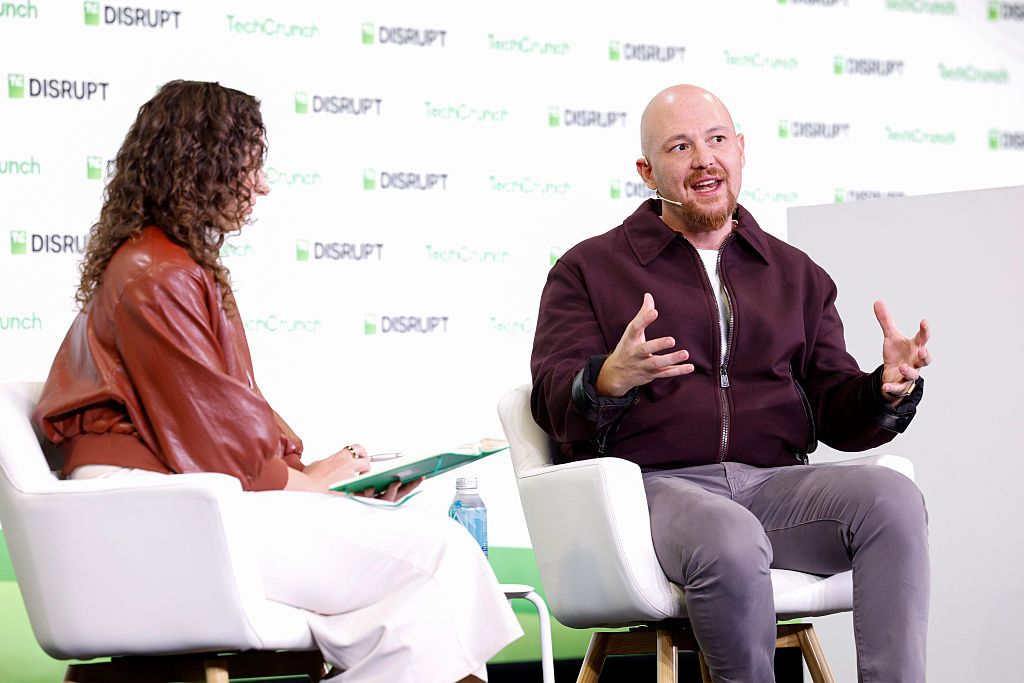

Replit CEO and co-founder Amjad Masad shared insights on the transformative role of AI in the workplace during his presentation at TechCrunch Disrupt in San Francisco. He discussed how organizations are increasingly incorporating his company’s AI-driven coding tools, paving the way for a future where human and AI agents collaborate effectively.
Masad introduced the concept of a “self-driving company,” arguing that AI agents are set to handle routine tasks, allowing human employees to focus on critical thinking and creativity. “The reality is, all of our jobs — perhaps everyone in this audience, especially — changed over the past year,” he remarked. He cautioned that many around the globe are yet unaware of the impending shifts in the workforce.
Reflecting on Replit’s internal changes, Masad noted that the company’s operations have significantly evolved as AI technology has advanced. “Our company entirely changed how we operate, and I would say the closest analogy is a ‘self-driving company’,” he stated. The notion centers on continuous improvement driven by AI agents.
To illustrate this point, he explained the support ticket process at Replit. Initially, AI agents assess incoming tickets, searching through GitHub issues, the codebase, and Linear tickets to provide context before a human takes action. This automation ensures that by the time an issue reaches a support team member, they have comprehensive information to make informed decisions.
“You have an entire loop where agents did most of the work, but crucially, there’s human judgment in the middle,” Masad elaborated. He emphasized the continuing need for human insight and creativity, suggesting that rather than replacing jobs, AI will alter the nature of work itself.
Masad highlighted a shift in focus within Replit, with teams spending more time on strategizing and brainstorming rather than mundane tasks. According to him, “We’re spending a lot more time figuring out what to work on,” leading to heightened collaboration and innovative problem-solving.
Discussions with other businesses reveal a collective interest in using AI to enhance productivity and job satisfaction. Masad pointed out that AI agents can reduce monotony, thus fostering a more engaging work environment.
“There’s a positive vision of the world that Silicon Valley is not really putting out, and we’re hoping to do that,” he concluded, underscoring the potential benefits of AI integration in the workforce.
Editor’s Take
This development highlights the evolving landscape of workforce dynamics due to AI integration. By reimagining roles and responsibilities, companies can prioritize human creativity and critical judgement over repetitive tasks. This shift not only enriches employee experiences but may also enhance overall productivity and innovation in tech-driven environments.
Source: techcrunch.com