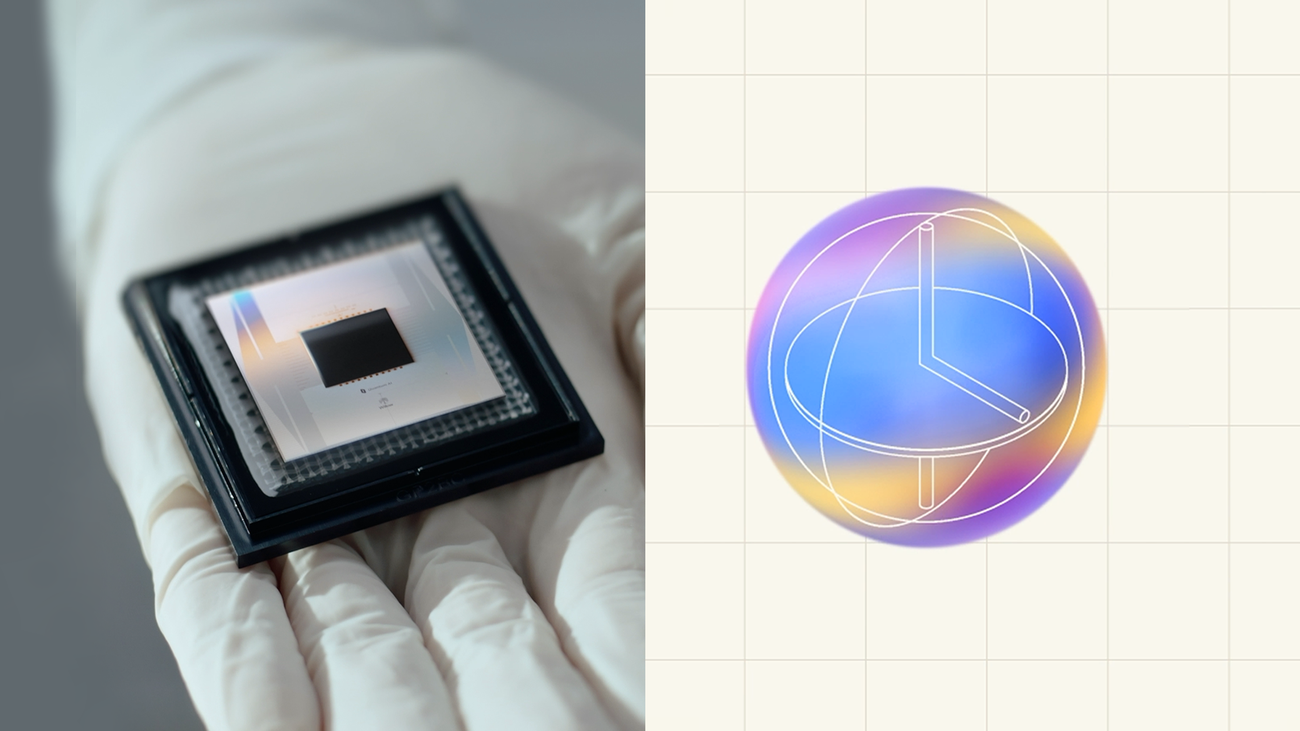

Google Solves a Major Bottleneck in Quantum Computing
In a landmark achievement, Google Quantum AI has successfully tackled a significant hurdle in quantum computing known as the “magic state bottleneck.” This breakthrough, demonstrated with their Willow processor, shows a staggering 40-fold reduction in errors associated with magic state cultivation, facilitating a step forward toward practical quantum computing applications.
The Challenge of Magic States
Magic states play an essential role in achieving universal quantum computing. They are necessary for executing a specific set of quantum operations, allowing systems to perform computations beyond classical capabilities. However, generating high-quality, error-corrected magic states is resource-intensive, with estimates suggesting that as much as 95% of a quantum computer’s capacity could be consumed by this process. This scarcity has posed a significant challenge for researchers since its identification in 2004.
The Breakthrough: Cultivation Technique
In a research collaboration led by Craig Gidney, Noah Shutty, and Cody Jones, the Google Quantum AI team introduced the technique of “magic state cultivation.” This approach acts as a filtering mechanism, where a noisy state is injected onto a quantum chip, undergoing a series of measurements to identify and remove errors. This innovative process allows researchers to cultivate a more refined and error-resistant quantum state, paving the way for larger-scale useful encodings.
Realizing this theoretical framework required significant engineering innovations and a change in approach. Emma Rosenfeld, a quantum research scientist at Google, reported initial experimental results that contradicted established physics. This prompted a thorough investigation, leading to essential adjustments in both the theoretical underpinning and the experimental setup, including techniques to reduce noise interference.
Demonstrating Success with Willow
The culmination of these efforts resulted in a state-of-the-art protocol, achieving a remarkable logical fidelity of 99.99% for T-states on the Willow processor. This marks the first practical demonstration of a solution for one of quantum computing’s most significant resource constraints, confirming the efficiency of magic state creation on real hardware.
Looking Ahead
Google’s findings also reveal compatibility with their quantum architecture, successfully enabling transitions between different quantum error correction methods, like color codes and surface codes. Although many technical challenges remain, this breakthrough is a crucial step toward the goal of developing a practical, error-corrected quantum computer capable of solving problems that classical systems cannot.
For those interested in exploring a range of innovative possibilities in AI, platforms that allow you to compare and use multiple AI models can provide integrated solutions across various tasks, much like how Google is pioneering breakthroughs in quantum technology.