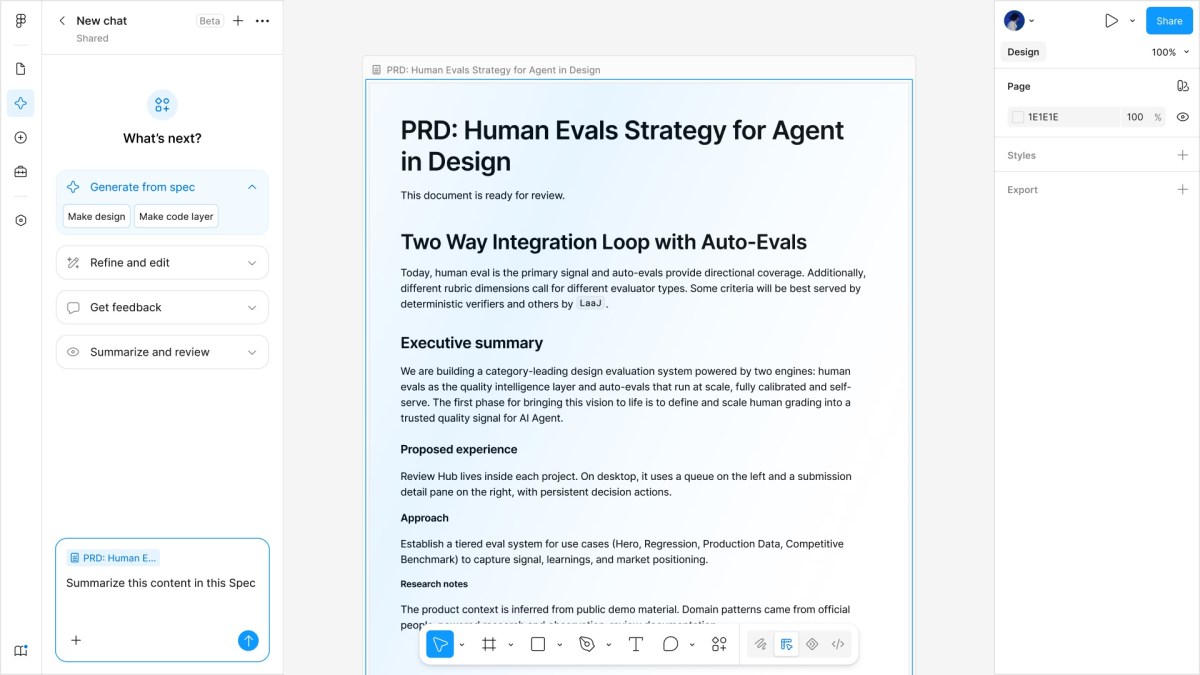

Figma has unveiled an innovative Markdown-based editor designed to enhance how companies establish their design identities and integrate with the Payload headless content management system. This announcement was made during the company’s inaugural Config event in India. The goal of these features is to assist both internal and third-party agents in adhering to a brand’s design guidelines more effectively, especially when leveraging AI.
Among the highlights of the event was the launch of Figma Specs, a user-friendly Markdown editor that allows teams to articulate their design language succinctly. This document can function as a crucial reference for both teams and agents engaged in Figma’s design processes. Not only can Specs exist independently within Figma, but they can also be integrated directly onto the canvas. In addition to being a text editor, it allows users to link to other Figma elements, as well as embed diagrams and designs from FigJam.
The editor also facilitates the inclusion of essential context regarding designs, such as libraries and guidelines, ensuring a cohesive understanding of the design system among all users. Agents can access this centralized system to stay aligned with established rules.

Recently, Figma expanded access to its on-canvas agent, enhancing user engagement. Given the unpredictable nature of AI, the company is equipping users with tools to direct AI outputs towards more reliable results.
Additionally, Figma is making its code layers feature available in public beta, which introduces coding capabilities within designs for more dynamic prototypes. Initially announced in a private beta earlier this year, this feature enables users to request that the agent convert designs into code or adjust existing code to refine prototypes.

According to Loredana Crisan, Figma’s Chief Design Officer, “Figma is the platform where software teams determine what to build and ship. The emergence of AI has significantly increased coding output, yet release frequency remains relatively low. Much of the produced code is intended for discovery rather than immediate deployment.” She emphasized the transformative role of AI in design processes.
Figma is also integrating over 20 new tools with its MCP, including Open Code, DIA, and Indian AI startup Sarvam.
The company’s recent acquisition of open-source headless CMS Payload is also progressing well, with its integration into the Figma Make product for creating dynamic websites. Notably, downloads of Payload have surged sixfold over the past year.
Figma established its first office in India late last year, focusing on sales, partnerships, product support, and market strategies. The platform has quickly become the largest market for Figma outside the United States, working with 40% of the top 100 companies listed on the Bombay Stock Exchange.
Editor’s Take
The introduction of these features comes at a pivotal time when design collaboration and AI integration are becoming essential for businesses. By streamlining design workflows and enhancing AI reliability, Figma is positioning itself as a critical player in the design tech landscape. This move not only benefits design teams but could also foster more innovative product development across industries.
Source: techcrunch.com