

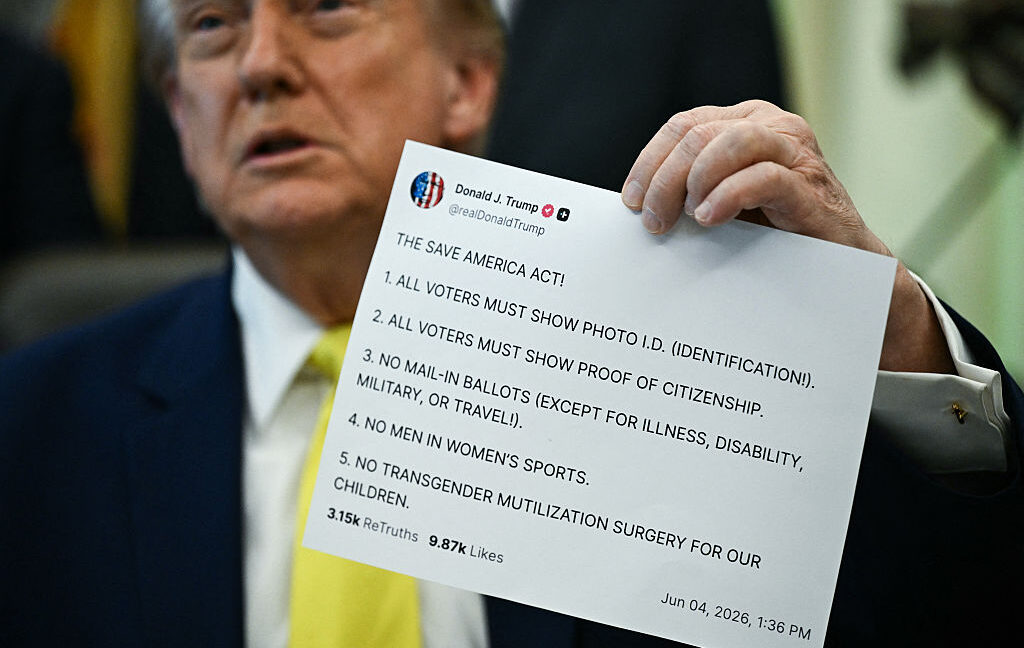

In the coming weeks, a federal judge will determine whether Donald Trump can become the first U.S. president to profit from offering early access to government information through his social media posts. This controversial case centers on Trump’s attempts to monetize access to his Truth Social posts, which often contain significant announcements from his time in office.
During a recent hearing, Brantley Mayers, a civil attorney with the Department of Justice, defended Trump’s practice of charging up to $100,000 each month for direct API access to his posts. Mayers argued there is no conflict of interest in Trump profiting from this arrangement. Trump holds the position of the largest stakeholder and majority owner of the Trump Media & Technology Group, the company behind Truth Social, making the value of this API access largely tied to his former role as president.
A coalition of news organizations has filed lawsuits, asserting that Trump’s steep API fees infringe upon the First Amendment and the Presidential Records Act. They argue that these charges create unequal access to vital government information that technically belongs to the public. Additionally, they claim that the fees violate the Fifth Amendment by unreasonably monetizing government information and providing preferential access based on “arbitrary and irrational” criteria.
Mayers drew a historical comparison, likening Trump’s Truth Social updates—covering topics like military actions, immigration policies, and economic changes—to Franklin D. Roosevelt’s famous “fireside chats.” He contended that these updates serve the public interest rather than reflect a purely profit-driven endeavor.
However, the judge overseeing the case, U.S. District Judge Paul Oetken, challenged Mayers’ arguments by highlighting that Roosevelt did not charge for his broadcasts. Oetken remarked, “Well, President Roosevelt didn’t charge money for his fireside chats, did he?”
In response, Mayers maintained that while Roosevelt’s chats were free, there were still barriers preventing certain segments of the population from accessing them, similar to how today’s smaller news organizations might struggle to afford the hefty fees for Truth’s API.
Editor’s Take
This unfolding legal matter raises significant questions about the ethics of monetizing government information and may set a precedent for future interactions between politics and technology. If Trump is allowed to monetize these posts, it could pave the way for a new model of accessing public information that prioritizes profit over transparency. This situation warrants close attention from users, businesses, and developers, especially within the AI and tech sectors, as it could influence how public communications are shared and accessed in the digital age.
Source: arstechnica.com