

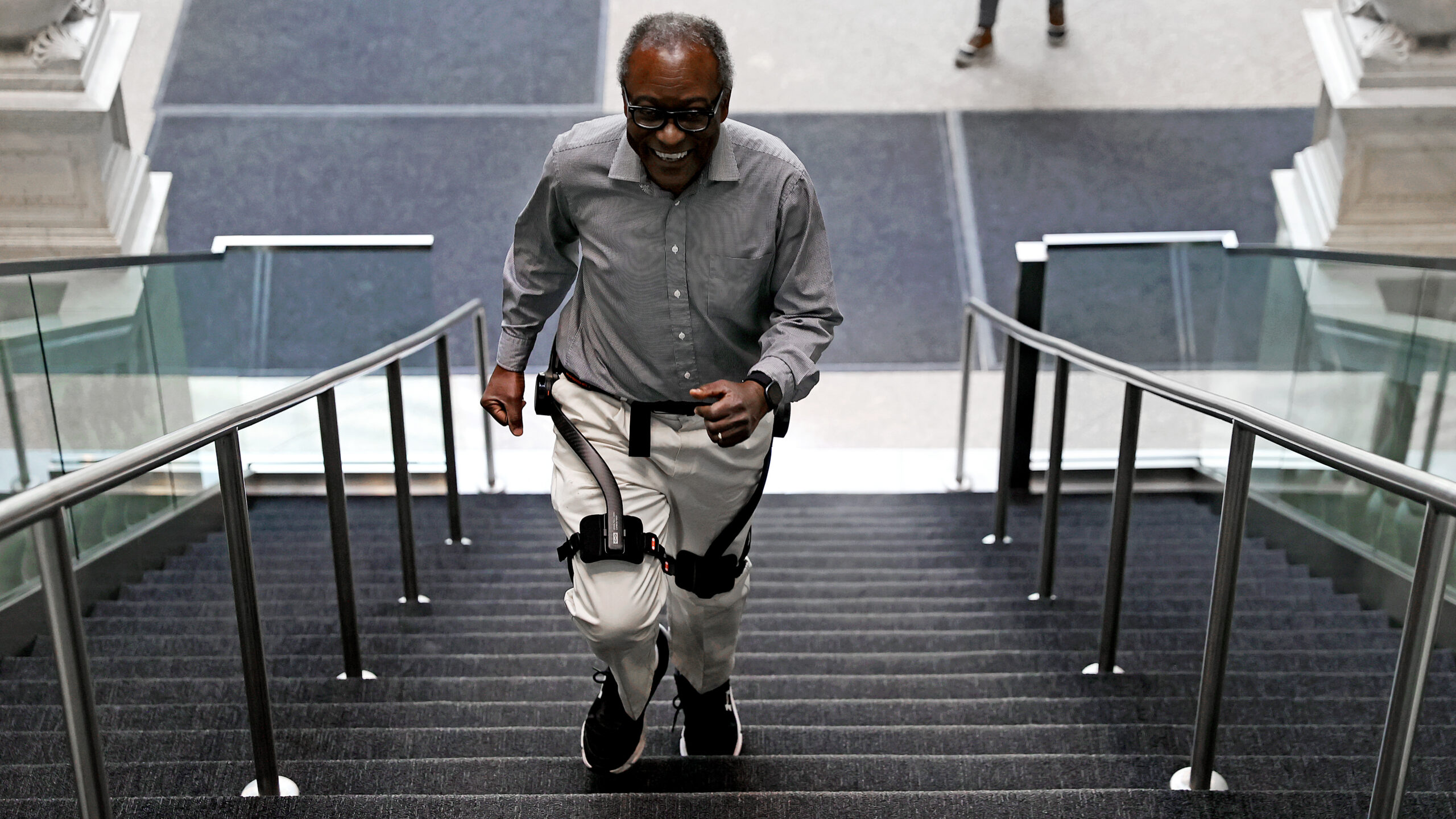

The Evolution of Exoskeleton Technology: Enhancing Human Capabilities
Exoskeletons are rapidly evolving from simple, pre-programmed devices to more sophisticated systems capable of adapting to users’ specific needs. Many modern exoskeletons now incorporate algorithms that learn from actual user behavior, enhancing their effectiveness in various tasks.
Categories of Assisted Movement
The assistance provided by exoskeletons typically falls into three distinct categories:
- Power Augmentation: This type focuses on enhancing the user’s strength and force capabilities. Notable applications include exoskeletons employed by IKEA and in various military settings, such as the ongoing efforts in Ukraine.
- Assist-as-Needed and Resist-as-Needed: These configurations offer support only when necessary, ideal for rehabilitation devices. They help users regain lost abilities by allowing for targeted assistance during training.
- Full Robotic Control: In this mode, the exoskeleton takes over certain body functions entirely, designed for individuals with significant motor impairments. For instance, a lower-body exoskeleton can enable a person with a spinal cord injury to walk, assuming comprehensive control over leg movements.
These operational modes can be combined and tailored to suit individual tasks and the user’s environment, showcasing the flexibility of these advanced systems.
Future Prospects
Currently, most exoskeletons operate mechanically, relying on sensor feedback to determine their actions. However, future advancements may incorporate inputs from the wearer’s muscles or even brain signals. This ambitious research remains challenging, possibly requiring invasive interfaces and meticulous user-specific customizations.
Another significant challenge lies in power management. Integrating batteries into exoskeleton designs raises weight and size issues that can hinder practicality. Fortunately, ongoing improvements in battery energy density offer hope for lighter and more efficient power solutions.
Innovative materials are also shaping the next generation of exoskeletons. Advances in soft textiles and rubber-like substances may lead to exoskeletons that can be seamlessly integrated into everyday clothing, footwear, or protective gear.
The foundational research conducted on walking exoskeletons during the 1960s and 1970s paved the way for the development of the first humanoid bipedal robots. Today, renewed interest in humanoid robotics is driving the advancement of actuators and battery technologies, promising significant strides in wearable robotic systems.
Ildar Farkhatdinov, Senior Lecturer in Healthcare Engineering (Robotics and Mechatronics), King’s College London. This article is republished from The Conversation under a Creative Commons license.
Editor’s Take
The continuous improvement in exoskeleton technology symbolizes a major leap forward in augmenting human capabilities, especially for those with mobility impairments. As power sources evolve and integration with neural signals becomes viable, the potential for enhanced quality of life increases significantly. This progress holds considerable implications for rehabilitation practices, workplace efficiency, and even military applications, shaping a future where exoskeletons could become mainstream tools in various sectors.
Source: arstechnica.com