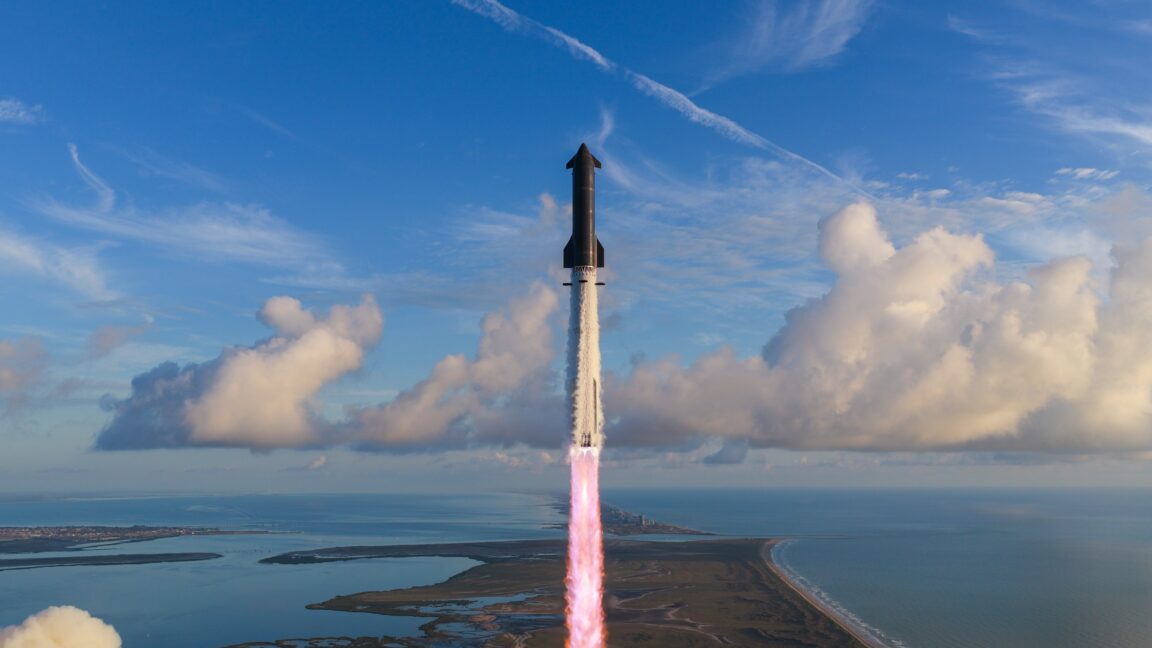
SpaceX’s Starship Successfully Reaches Orbit, Launches First Next-Gen Starlinks

Credit: SpaceX
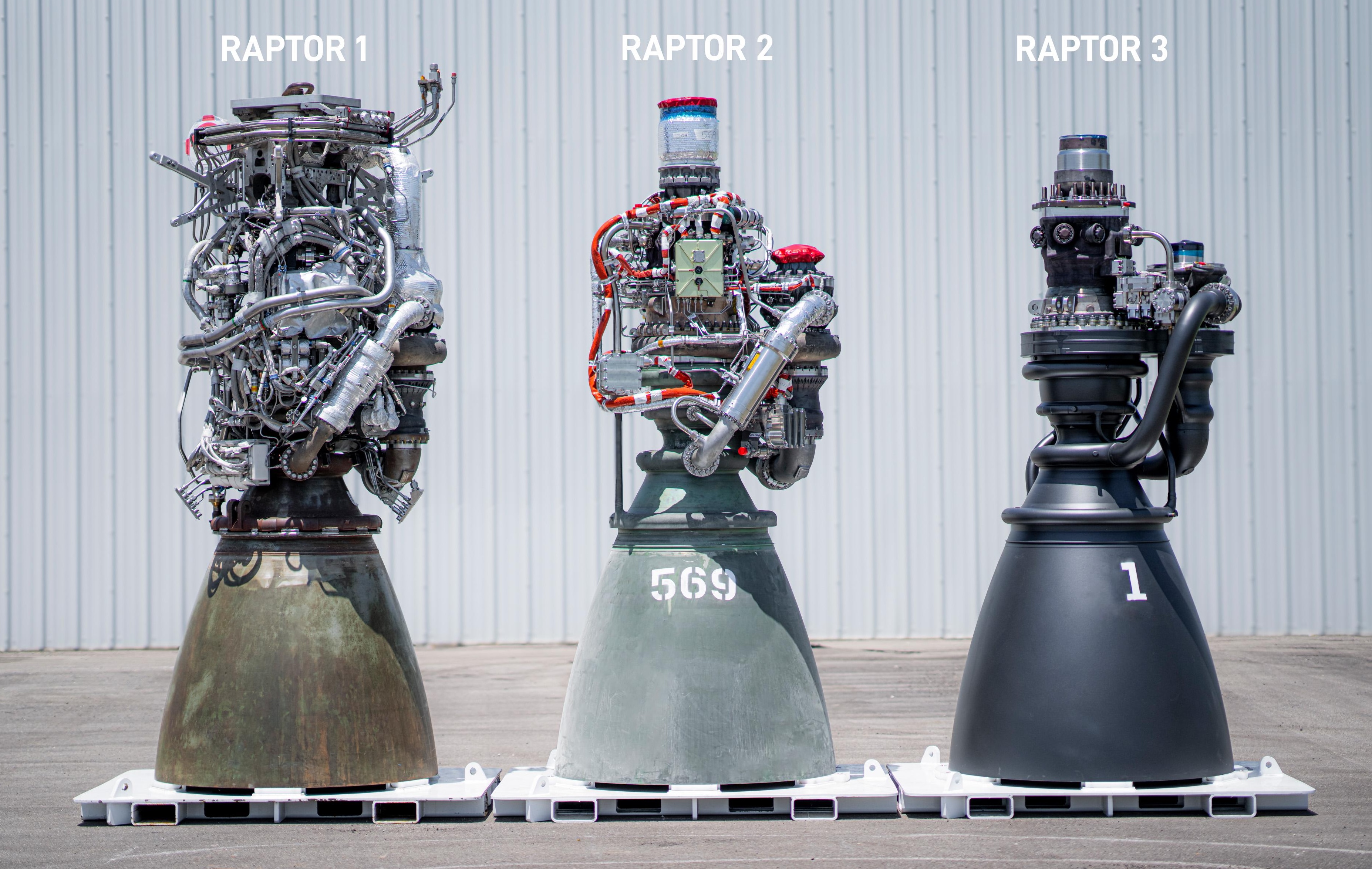
A family portrait of SpaceX’s Raptor engines.
Credit: SpaceX
SpaceX has encountered issues with its Raptor 3 engines on three separate flights of its Starship program. During a mission in May, one of the engines on the Super Heavy booster failed prematurely, while another malfunctioned in the upper stage shortly thereafter. Subsequently, in July, multiple engines did not ignite during a launch attempt, forcing a last-minute cancellation. SpaceX then replaced two engines, successfully launching the following week.
Elon Musk, the company’s founder and CEO, commented on social media about the design changes of the Raptor 3 engine, stating that these modifications significantly lower the engine’s mass and reduce leak points, but complicate the process of part replacement.
“While removing parts might seem straightforward in theory, achieving this in practice is notably complex and demands numerous iterations,” Musk elaborated. He also highlighted the intricate geometry of the Raptor 3’s interior, which requires advanced 3D metal printing techniques.
Despite these ongoing challenges with the Raptor engines, SpaceX continues to make progress with its Starship project. Musk indicated that the propulsion issues experienced in the latest flight are unlikely to hinder future missions.
The FAA has confirmed that there will be no need for a formal investigation into the recent flight, stating that all operations fell within planned and authorized activities.
Looking ahead, SpaceX plans to attempt a recovery of the Starship at the launch site, a procedure already successfully performed with the Super Heavy booster. This will necessitate additional safety assessments to mitigate risks for populated areas during the reentry phase. Ultimately, SpaceX envisions making landings routine to facilitate the rapid reuse of both the Super Heavy and Starship systems.
In the near term, missions involving Starship will include launching additional Starlink satellites, driven by strong demand from both commercial and governmental sectors. Furthermore, SpaceX is also exploring ambitious plans for orbital data centers, ensuring the Starship platform remains busy while advancements in its capabilities are refined.
Editor’s Take
This ongoing development in SpaceX’s Raptor engine technology highlights the complexities involved in aerospace engineering. The challenges with the Raptor 3 emphasize the delicate balance between innovation and reliability. As SpaceX aims for rapid reuse of its spacecraft, the resolution of these engine issues will be crucial for gaining public and regulatory confidence, ultimately affecting future missions and commercial satellite launches.
Source: arstechnica.com