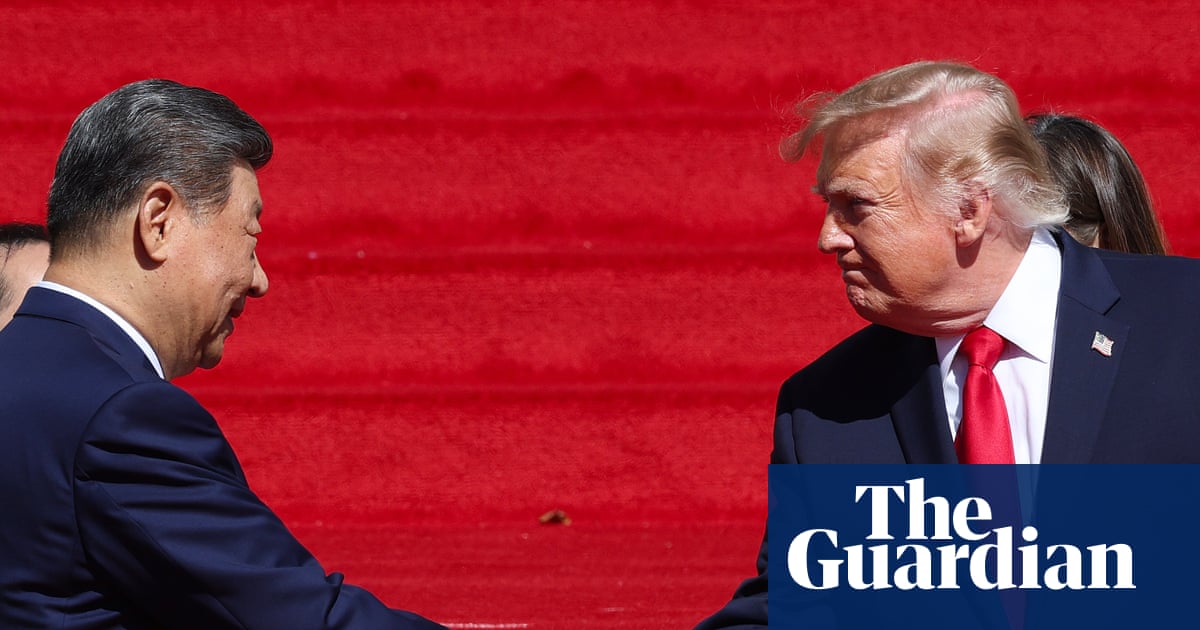

Donald Trump and Xi Jinping, the President of China, concluded their summit in Washington on Friday, facing intense scrutiny for missing a pivotal opportunity to address the escalating artificial intelligence (AI) arms race between their nations.
This three-day state visit focused more on ceremonial displays and personal connections than on substantial agreements. During their discussions, the two leaders addressed conflicts in Iran and Ukraine, in addition to the issue of Taiwan. The only major policy outcome was a temporary two-month extension of an existing trade truce.
Despite having key tech executives in attendance at a state dinner on Thursday, Trump and Xi did not announce any significant advances regarding AI, disappointing many experts and foreign officials who had been hoping for decisive action on the technology that poses existential risks to humanity.
“It was such a layup,” remarked Ro Khanna, a leading Democrat on the House of Representatives’ select committee on China. “If Trump had simply established technical working groups committed to a framework that would involve collaboration among major AI firms, he could have demonstrated genuine leadership.”
Khanna believed that Xi would have been open to such frameworks, but felt that Trump lacked the interest to pursue them. This visit marked the first time in over a decade that a Chinese president has been welcomed in the White House and represented Xi’s second state visit to the U.S. Three days filled with pomp concluded with Trump and Xi sharing tea, although specific details about their discussions remained vague.
The two leaders visited the National Archives to view foundational U.S. documents including the Declaration of Independence and the Constitution. Trump highlighted the significant contrast in historical depth between the U.S. and China, noting, “Ours goes 250 years, which is great, and we’re proud of. Theirs goes 6,000 years.”
On Thursday, Xi acknowledged the shared responsibility of the U.S. and China to “develop and manage AI for good,” emphasizing that AI must always remain under human control. China aims to achieve over 90% penetration of next-generation AI technologies by 2030.
In contrast, Trump has expressed that the U.S. must maintain technological dominance over China. He appeared more interested in rebranding AI as “super intelligence,” later claiming on social media that Xi “seems to like” this term, without providing insights into their discussions.
During the state dinner, notable figures from the tech industry were present. However, Senator Bernie Sanders criticized the gathering by pointing out the vast wealth of the attendees, labeling it a “government of, by and for the billionaire class.” Notably absent were Chinese tech executives, reflecting a lack of collaborative spirit between the two countries.
Khanna expressed disappointment that Trump did not pursue even minor agreements that could lead to close collaboration, stating that technical recommendations, enforcement, and verification would have been valuable outcomes.
Jonathan Czin, associated with the China Center at the Brookings Institution, echoed these sentiments, emphasizing that the summit fell short of addressing the timely and significant issues posed by current technological advancements.
The visit also showcased the contrasting approach Trump takes toward democratic allies and authoritarian regimes. Breaking from political tradition, he extended a red carpet welcome to Xi upon his arrival.
Trump also demonstrated notable hospitality, providing Xi with a tour of the White House, which included a look at ongoing renovations. This meeting, however, was marred by controversy as Trump had previously barred some U.S. media outlets from the White House, while allowing Chinese state media access.
As the summit wrapped up, critics noted a lack of meaningful concessions from China concerning trade, security, human rights, or AI. Senate Minority Leader Chuck Schumer criticized Trump for his behavior, suggesting that his actions are influenced mainly by who flatters him most.
Looking ahead, Trump and Xi are scheduled to meet twice more in the coming months, with the next meetings set for the Asia-Pacific Economic Cooperation summit in November and the G20 summit in December.
Editor’s Take
The recent summit between Trump and Xi highlights a critical juncture in international AI policy. Both leaders missed the chance to establish collaborative frameworks that could shape responsible AI development. As AI continues to advance rapidly, the absence of concrete agreements raises concerns for global stability and technological ethics.
Source: www.theguardian.com