

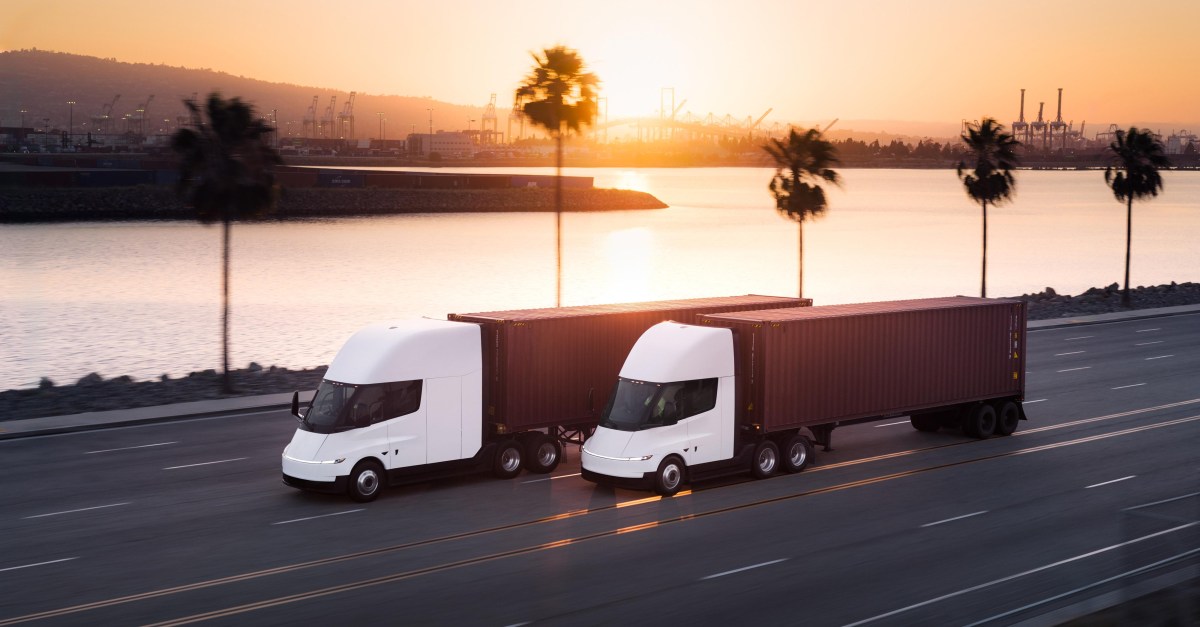

The much-anticipated Tesla Semi, a heavy-duty electric truck first unveiled in concept back in 2017, has finally entered mass production as of April 2026. After years of delays, including factors like the COVID-19 pandemic and global supply chain issues, the company showcased this long-awaited vehicle at an event aimed at customers and investors, reassuring them that the time for the Semi has finally arrived.
The event took place at Tesla’s new Semi manufacturing facility adjacent to Gigafactory Nevada, which has the capacity to produce up to 50,000 trucks annually, equating to 1,000 units per week. It was also an opportunity to announce several customers for the Semi, including major names like PepsiCo, DHL, and IMC. Interestingly, many of these partnerships had been prematurely revealed prior to the event through drone footage shared by a YouTuber.
While the initial deliveries commenced this week, several key details about production volumes and pricing remain elusive. Tesla did not disclose specific order numbers, nor did it provide an updated cost for the truck, which is rumored to begin at approximately $290,000 for the longer-range model. This lack of transparency has become a common theme during Tesla events of late.
Originally scheduled for production in 2019, the Semi faced multiple production setbacks due to a myriad of challenges, including global supply shortages. In recent years, Tesla delivered a handful of Semi trucks to PepsiCo, but those were hand-built prototypes.
When the Semi was first announced, starting prices were set at $150,000 for a 300-mile version and $180,000 for the 500-mile version. However, reports suggest Tesla has begun quoting prices of $290,000 for the 500-mile range configuration.
Over the past three years, Tesla refined the Semi’s design, successfully reducing the vehicle’s weight by nearly 1,000 lbs. In February 2026, Tesla confirmed the final production design, featuring a Standard Range with 325 miles of range and a Long Range version with 500 miles. Volume production commenced in April when the first Semi rolled off the production line.
Despite the absence of CEO Elon Musk at the event—he was attending a dinner with President Trump and President Xi—he delivered a pre-recorded message praising the Semi as “the funnest truck to drive.” He asserted, “This is really going to be a revolutionary truck, capable of carrying the heaviest loads over long distances with ease.”
Much of the presentation focused on the advanced technology and engineering behind the truck. Dan Priestley, Tesla’s Director of Semi Truck Engineering, noted that the 500-mile range is achievable even when the truck is fully loaded. Moreover, customer needs prompted the development of different Semi variants, allowing for a range of applications.
Tesla aims to position the Semi as more cost-effective than traditional diesel trucks, especially against a backdrop of rising diesel prices, which have recently surged past $6.50 per gallon in the U.S. The energy consumption for the fully loaded Semi is reportedly around 1,700 Wh/mile, compared to an initial target of 2,000 Wh/mile.
The Semi employs Tesla’s in-house 4680 battery cells, improving efficiency and allowing for a lighter, less expensive battery without compromising range. This battery upgrade is expected to enhance overall vehicle performance significantly.
Significant modifications have also been made to the Semi’s powertrain, including transitioning to a new steel-caged rotor that is lighter and more efficient than its predecessor. This redesign aims for improved durability and reduces the complexity of maintenance.
In addition, the Semi will introduce enhanced features for navigation and driver experience, including personalized driver profiles and dynamic range estimates that consider varying payloads.
Challenges remain for Tesla, as the company must expedite truck deliveries to fulfill years of waiting for its electric trucks. Facilitating charging will be another critical hurdle, given the Semi’s need for rapid power replenishment at high levels to recharge its substantial 822 kWh battery.
Looking ahead, Tesla has started constructing a network of Megacharger stations that will support the Semi, aiming for over 200 megawatt-capable charging posts by year-end. With a significant waiting list reportedly in place, the demand for this electric truck appears poised to grow.
Editor’s Take
This transition to mass production of the Tesla Semi marks a critical milestone in the electric vehicle sector, especially within commercial trucking. Its introduction could set a precedent for zero-emission freight logistics, presenting opportunities for significant cost savings in fuel and maintenance for businesses. However, effective delivery and charging infrastructure will be essential to maintain momentum and satisfy customer demand.
Source: www.theverge.com