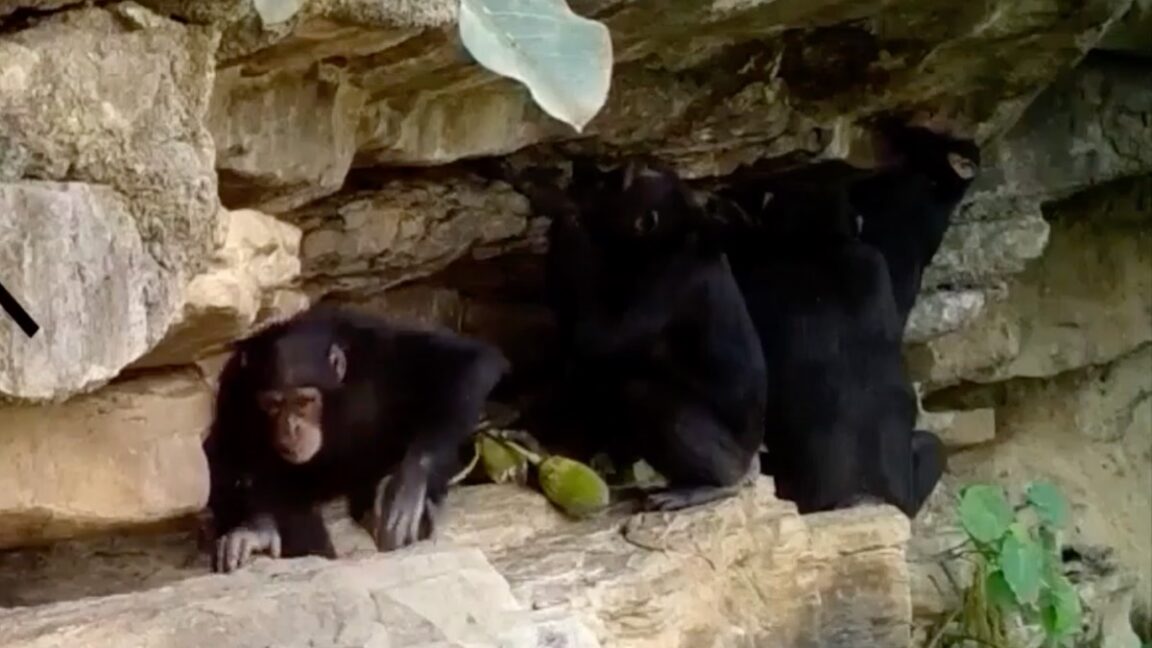

Chimpanzees have long fascinated researchers with their ability to use basic tools in the wild. A recent study published in the journal Frontiers in Psychology sheds new light on how these behaviors are transmitted from one generation to the next through social learning. The research indicates that experienced adult chimps deliberately demonstrate tool-using techniques and provide their tools to younger members of the group, facilitating practice and imitation.
According to Andreu Sánchez-Megías, a graduate student at the University of Barcelona and the Jane Goodall Institute Spain in Senegal and co-author of the study, “The transfer of food and tools from knowledgeable individuals to younger chimps aids in their learning, allowing them to access hard-to-reach food sources.” This method of learning is positioned as a form of teaching that combines observation and supervised practice, with mothers serving as primary teachers and role models.
The notion of tool use has historically been viewed as a defining characteristic of humanity. However, observations date back to Charles Darwin, who noted chimps using stones to crack nuts in 1871. Further studies by the renowned primatologist Jane Goodall in 1960 captured a chimp named David Greybeard utilizing a bent twig to extract termites from their nests. Goodall’s mentor, Louis Leakey, is famously quoted as stating that this discovery challenged existing definitions of both “tool” and “human.” Today, chimps have also been seen creating sponges from leaves, shaping sticks for algae collection, and crafting rudimentary spears for hunting.
Tool use isn’t limited to chimpanzees. Various other species, including some monkeys and dolphins, exhibit similar behaviors. Dolphins, for example, engage in throwing objects—often seen as a kind of tool use—especially during social interactions, possibly serving functions such as communication and bonding. Moreover, octopuses have been documented partaking in comparable throwing behaviors, showcasing the diverse manifestations of tool use across the animal kingdom.
Editor’s Take
This study emphasizing social learning among chimpanzees illustrates the complexity of animal behavior and intelligence. Understanding how these creatures learn from one another not only enriches our knowledge of primate societies but also challenges the perception of tool use as a uniquely human trait. For researchers and conservationists, such insights may inform strategies for preserving habitats and enhancing animal welfare in both wild and captive settings.
Source: arstechnica.com