Proteomics Reveals Ancient Egyptian Material Secrets, Advancing Historical Research

Unlocking Ancient Egyptian Artifacts with Cutting-Edge Proteomics
Recent advancements in mass spectrometry-based proteomics have unveiled new insights into ancient Egyptian art and construction methods. This innovative technique allows for meticulous characterization of protein residues within samples, identifying not only their composition but also any deterioration over time. Remarkably sensitive, this method requires significantly less sample material compared to traditional methods, opening the door to analyzing complex mixtures rather than focusing solely on predefined proteins.

Museum of Mediterranean and Near Eastern Antiquities, Stockholm

In a fascinating study published in 2023, researchers utilized this advanced technique to explore artistic practices during the Danish Golden Age, revealing that beer byproducts served as common canvas primers. Earlier this year, findings were shared about identifying proteins from the fingerprints of Renaissance individuals, highlighting how they acquired practical knowledge through hands-on experimentation.
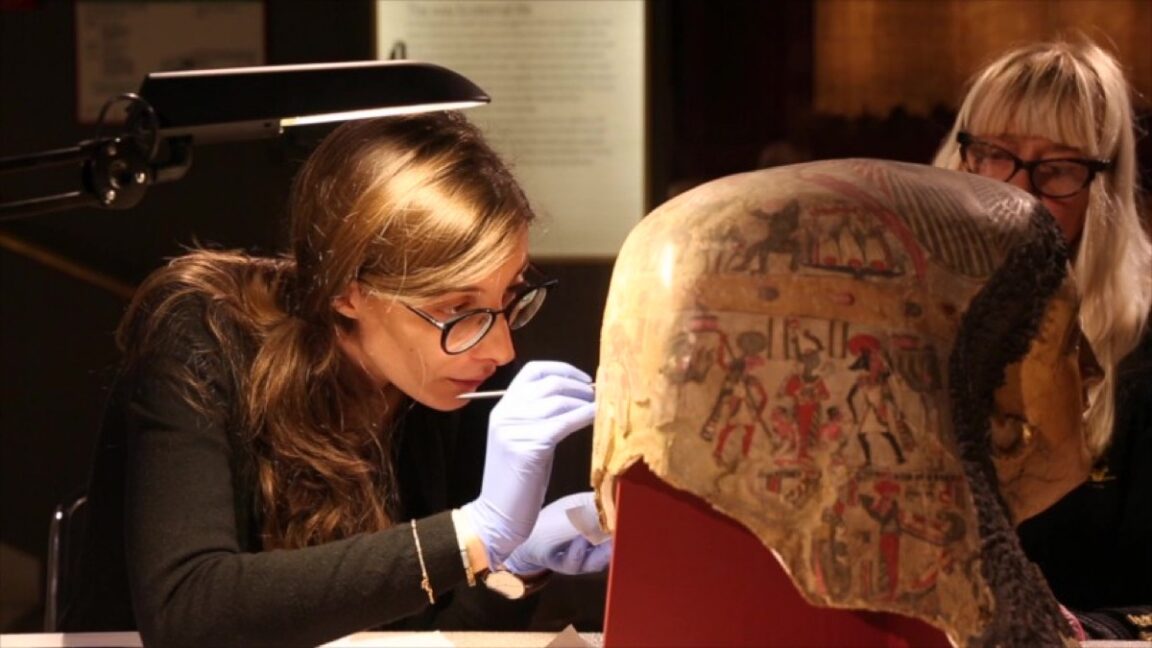
For the latest analysis, scientists examined tiny samples from various ancient Egyptian artifacts spread across collections in Sweden, the UK, and Denmark, dating from around 1425 BCE to 400 CE. The artifacts included painted wooden coffins, tomb wall fragments, painted plaster used for mummy busts, and architectural elements made from painted limestone. The research team also scrutinized blank negative control samples and analyzed the chemical damage to the proteins identified to mitigate any risk of laboratory contamination influencing the results.
The findings revealed that ancient Egyptians predominantly utilized cow glue and collagens extracted from various animals such as sheep, goats, horses, donkeys, and antelope. Preparation likely involved boiling animal skin and connective tissues. Importantly, these materials were identified not only in adhesive samples but also in paints and foundational layers, indicating that the Egyptians selected materials based on their availability. The authors noted, “No notable correlation was observed between the choice of the animal species/part and the object type, the nature of the application, the color, the chronology, the geographical origin, or the use context (funerary or palatial).”
Editor’s Take
This research exemplifies how modern technology can reveal layers of cultural history. By decoding ancient materials, it not only enhances our understanding of past civilizations but also reveals potential applications in contemporary art restoration and materials science. For artists and historians alike, these insights could reshape approaches to preservation and authenticity.
Source: arstechnica.com