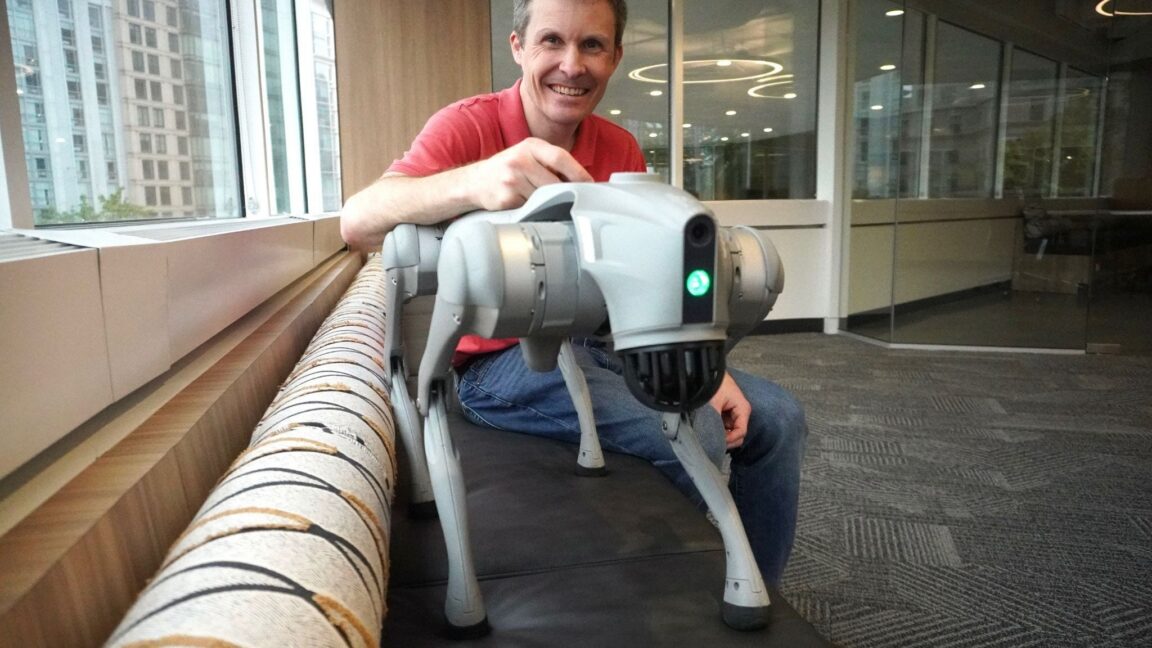

In the fast-evolving landscape of robotics, a notable trend is emerging. The principle of a flywheel effect is becoming increasingly apparent; as companies sell more units, they secure better deals with suppliers and can invest more heavily in refining their manufacturing processes. This, in turn, leads to even lower costs and higher sales volumes. DJI, a leader in the drone market, has successfully leveraged this model. A report from SemiAnalysis suggests that Unitree is positioning itself to follow a similar path in the realm of legged robots.
SemiAnalysis highlights that Unitree has made significant strides by innovating its own production capabilities—developing proprietary motors, gearboxes, lidar sensors, and cameras. The firm’s self-manufactured motors reportedly operate at only 30-40% of the cost of comparable Western alternatives. Additionally, it produces some of the most affordable humanoid gearboxes available globally.
This competitive edge could propel Unitree to establish a commanding presence in the global quadruped and humanoid robot markets, akin to DJI’s achievements in drones. However, challenges lie ahead. Unitree faces stiff competition from several Chinese rivals, while another company, AgiBot, has recently outsold Unitree in the humanoid robot category. A host of smaller Chinese firms also poses potential threats to Unitree’s market share in the years to come.
In the United States and much of the Western market, however, Unitree seems to face minimal competition. While Boston Dynamics produces high-quality robots, their price point is significantly higher. Emerging American startups like Tesla, Figure, and 1X are vying to develop humanoid robots, but currently, none are available for consumers.
This scenario has raised concerns among American officials. In June, a bipartisan coalition in the House introduced legislation aimed at restricting the import of Chinese robots, explicitly naming Unitree in their press release. Furthermore, in July, the FCC implemented extensive new regulations on foreign-made robots, which are likely to affect Unitree and similar companies from China.
Despite these hurdles, the global nature of the robotics market means that even if Chinese firms are barred from the U.S. market, Unitree or one of its rivals could still emerge as a dominant force in global humanoid robotics. This situation mirrors the electric vehicle sector, where companies like BYD have thrived outside the U.S. despite facing barriers in that market. The risk is that prohibitions on Chinese robots might inadvertently position the United States as a laggard in technological advancements.
Tim Lee was previously on staff at Ars from 2017 to 2021. He has since launched a newsletter, Understanding AI, focused on the intricacies of artificial intelligence and its impact on the world.
Editor’s Take
The ascent of companies like Unitree highlights a critical juncture in the robotics industry. As competition intensifies, especially from Chinese firms, it raises questions about innovation, pricing, and accessibility in the U.S. market. The potential restrictions could stifle technological growth domestically while allowing other nations to advance unimpeded.
Source: arstechnica.com