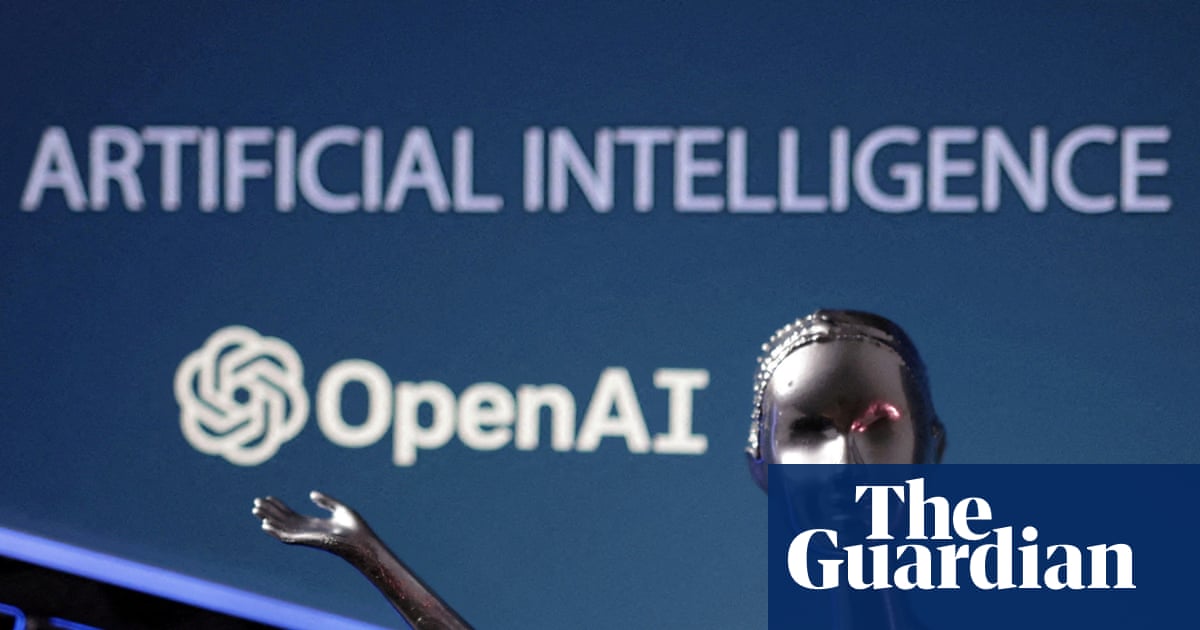

The mathematics community is currently facing a profound transformation, spurred by a recent achievement from OpenAI. The organization announced that its latest artificial intelligence model has solved a challenging problem known as a Millennium Prize Problem, a feat that has eluded mathematicians for decades and comes with a reward of $1 million.
This milestone was reached through a remarkable approach—not through the usual diligent struggle typical of mathematical breakthroughs, but by deploying a staggering 10,000 autonomous AI agents to tackle the challenge, with the entire endeavor costing an estimated $15 million.
The implications of this breakthrough are sending ripples of concern throughout the mathematics profession. Prof. Colva Roney-Dougal, who heads the pure mathematics department at the University of St Andrews, expressed her shock at how quickly the landscape is changing. “I initially thought AI wouldn’t deliver significant results soon, but just three months later, I find myself utterly mistaken. The rapid pace is astonishing,” she noted.
Prof. David Silvester of the University of Manchester described the current state of the discipline as “very unstable,” reflecting a growing anxiety among mathematicians about the future of their field. He remarked, “With enough resources, all open math problems could fall. This shift is irreversible and fundamentally alters our discipline.”
Another mathematician, Prof. James Robinson from the University of Warwick, criticized tech companies for consuming the creative essence of mathematical challenges in pursuit of publicity. “It feels like a grand display of boastfulness, powered by substantial financial resources and the potential for significant environmental consequences, especially when climate change looms large,” he stated.
For many in mathematics, the thrill of problem-solving is central to their passion for the field. Silvester shared that the joy comes from the journey of grappling with a problem, which shapes one’s understanding and appreciation of mathematics. “Without that element, the entire subject feels transformed,” he articulated.
In light of these developments, mathematicians are increasingly preoccupied with validating each other’s proofs as they encounter AI-generated solutions. This scrutiny is reminiscent of the gap found in Andrew Wiles’s proof of Fermat’s Last Theorem back in 1993, which led to a year of revisions. Now, Silvester anticipates that mathematicians may spend more time auditing AI-produced proofs rather than offering original insights. “It may feel more like accounting than creativity,” he said.
The shift also poses challenges in mathematical education. Traditional homework assignments are becoming problematic as the authenticity of students’ work can no longer be guaranteed. Silvester explained, “Given that students can easily turn to AI for solutions, lecturers are forced to navigate the tricky waters of establishing guidelines for when AI can be used.”
Despite these upheavals, Prof. Alexander Paseau, who studies the philosophy of mathematics at the University of Oxford, believes that the allure of the subject remains intact. “Even if AI surpasses humans in research, the intrinsic fascination with mathematics and the beauty of proofs will endure,” he asserted.
The recent breakthrough involved OpenAI‘s solution to the Navier-Stokes problem, a critical equation set that models fluid dynamics and atmospheric behavior. While the model has drawn praise for its capabilities, it has also sparked concern among mathematicians. Recent investigations revealed that the AI may have inadvertently absorbed insights from the ongoing work of mathematicians such as Prof. Tristan Buckmaster at New York University and Levent Alpöge at Anthropic.
In a world where collaboration is vital, tensions are surfacing regarding the sharing of ideas. “The current environment has changed dramatically; mathematicians are now hesitant to share their findings,” Buckmaster commented. “We must determine how to navigate this new landscape,” he concluded.
Editor’s Take
This development signals a pivotal moment for the mathematics community, as AI continues to blur the lines between creativity and computation. The implications could redefine not just academic pursuits, but also the way future generations engage with mathematics. Embracing AI as a tool rather than a rival will be essential for mathematicians to thrive in this evolving landscape.
Source: www.theguardian.com