

New Footage from Nepal Shows Floodwaters Moving Boulder and Tsunami Escape Attempts

Recent dramatic footage from Nepal has surfaced, vividly illustrating the devastating impact of flash floods that struck the region on Wednesday. The floods, similar to tsunamis, wreaked havoc along the Nepal-Tibet border, resulting in significant loss of life and destruction of property.
Emergency services have sadly reported at least 332 fatalities, with over 800 individuals currently unaccounted for. In the Tibetan region controlled by China, officials report that 558 people are missing, along with three confirmed deaths. The overlap in these figures between the two countries remains unclear.
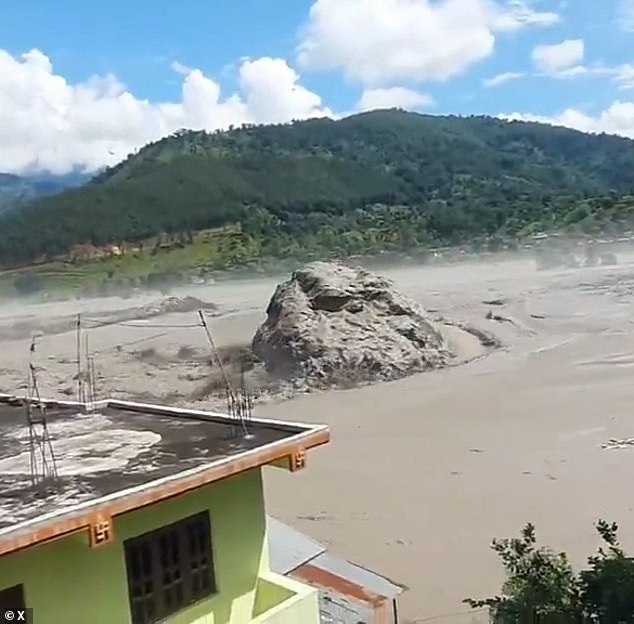
Many survivors documented the catastrophic events unfolding around them. One video shows a torrent of water sweeping through a valley town, where a massive boulder is seen rolling along in the muddy floodwaters, captivating horrified onlookers as it nears their homes.

Horrified onlookers filmed the huge boulder as it passed their homes, pushed along by the strong-flowing water.
Footage from the disaster shows workers in orange safety gear fleeing from a perilous wave of water threatening their safety. One individual, initially filming the scene, suddenly realized the danger, running away while repeatedly exclaiming, “Oh my god.” As they found higher ground, the sounds of crashing water filled the air, indicating the overwhelming force of the approaching flood.
Further downstream, residents of a small riverside village watched in horror as the tsunami-like wall of water rushed toward their homes.

Scores of men in hi-vis jackets and hard hats fled in terror as they watched the mass of water rush through a valley.
As the powerful surge of water twisted down the river, panic ensued among onlookers. The river quickly overflowed, sending debris and muddy sludge into neighboring fields within minutes.
Residents living near a town along the confluence of the Trishuli and Tadi rivers witnessed the bridge being swept away, highlighting the sheer power of the floods. A glacial collapse in the mountains near the Tibetan border is believed to be the primary cause of this catastrophic flooding.

A drone view shows the level of destruction, in Trishuli in Nuwakot district, Nepal.
Simon Cox, a principal scientist at New Zealand’s GNS Science, noted that a large section of glacier collapsed around 5,200 meters, triggering the massive flow of water that picked up rocks and debris. This event was initially mistaken for an earthquake, registering as a 5.2-magnitude seismic event, but later determined to be a glacial collapse accompanied by debris flow.
As rescue operations continue, Nepali authorities are searching for survivors and assessing the level of destruction. In the aftermath, experts are utilizing satellite images to understand the extent of the glacier collapse, which could range from half a million to tens of millions of cubic meters.
With the affected areas being largely inaccessible, assessments of the damage rely heavily on remote monitoring techniques. The disaster has raised concerns about the risks posed by climate change as glaciers continue to retreat, heightening the possibility of such catastrophic events in the future.
Editor’s Take
This tragic event underscores the increasing vulnerabilities posed by natural disasters, especially in light of climate change. For businesses and communities in mountainous regions, the need for effective warning systems is critical. Enhanced understanding and monitoring of glacial conditions can ultimately mitigate risks and potentially save lives.
Source: www.dailymail.com