

Nuclear Codes and Fantasy Games: A Unique Trend in Moscow
Key Highlights
Moscow witnesses an intriguing trend where players engage in a race to uncover nuclear codes.
Russian authorities are amplifying fears by conducting a mass nuclear preparedness drill.
“Attention! Attention!” A commanding Russian voice resonates through loudspeakers, declaring, “Nuclear bombs will launch in one hour.”
Within a room resembling a Soviet-era nuclear bunker, participants hurriedly attempt to avert a catastrophic strike on the United States.
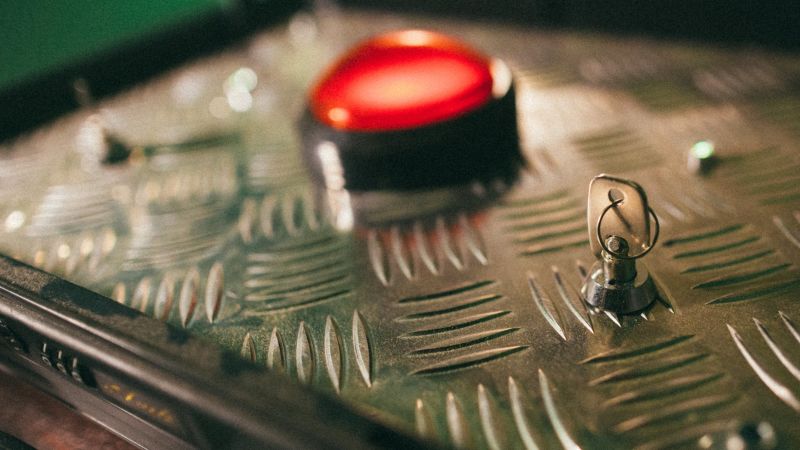
Their mission — part of a novel craze in Moscow — involves locating elusive nuclear launch codes and deactivating a concealed red button, already triggered by a fictitious Russian general.
This interactive experience echoes the fears rooted in the Cold War era, harking back to stressful historical moments.
However, it’s merely an engaging game hosted in a repurposed industrial building.
Given the current geopolitical tensions surrounding Russia, where the risk of nuclear confrontation with Western nations has resurfaced, this scenario feels rather disconcerting.

“I harbor concerns as both sides are disseminating foolish information,” remarks Maxim Motin, a participant who recently engaged in the Red Button Quest. “I am confident that ordinary individuals worldwide oppose war.”
Amidst rising tensions, Russian officials are preparing citizens for potential conflict, heightening fears of strife with the West, a longstanding adversary since the Cold War.
State media in Russia broadcasted a large-scale training operation designed for up to 40 million individuals nationwide. The drill aims to teach responses to possible chemical or nuclear assaults.

Footage captured showcases emergency responders clad in protective gear leading the largest civil defense exercise since the disintegration of the Soviet Union, indicative of the Kremlin’s desire to instill a serious perception of war threats among Russians.
Despite these actions, a full-scale conflict between Russia and the West remains improbable, according to analysts.
They assert that the notion of Mutually Assured Destruction (MAD) continues to serve as a crucial deterrent, much like during the Cold War.
Nevertheless, increasing tensions related to Syria, Ukraine, and the Baltic nations have led analysts to warn that the chance for miscommunications and escalation between nuclear powers has escalated.
“Nuclear war appears unlikely,” states Fyodor Lukyanov, editor of Russia in Global Affairs, a notable foreign policy journal. “However, with both nuclear superpowers deploying their military assets in close proximity, unintended incidents may occur.”
The Kremlin seems eager to highlight this risk, with state-run media intensifying its hardline rhetoric in recent weeks.
In a recent flagship news segment, Dmitry Kiselyev, a leading state broadcaster often criticized as the Kremlin’s “propagandist-in-chief,” issued a serious warning. He indicated that aggressive behavior towards Russia could potentially escalate to nuclear dimensions.
The Russian defense ministry has unveiled new details regarding the latest intercontinental ballistic missile integrated into its nuclear arsenal. This new weapon, known as Satan 2, is touted as the world’s most destructive, ensuring Russia’s prominent status as a nuclear power.
This grim reality enhances the surreal background of the gaming quests unfolding in Moscow.
“Educational institutions in Russia now inform children that our primary enemy is the U.S.,” said Alisa Sokoleva, another gamer from Moscow. “This strikes me as absurd; I firmly believe war is impossible.”

Returning to the simulated Cold War bunker, the gamers manage to crack the launch codes and deactivate the missile launch, saving the United States from this fictional Russian nuclear strike.
Let’s hope the real world avoids such confrontations.
Editor’s Take
This unique intersection of gaming and current geopolitical tensions in Russia symbolizes how public sentiment is shaped by both fantasy and reality. As these narratives play out, they reflect broader anxieties among citizens regarding international relations and the potential for escalation. Understanding these dynamics is crucial for technology developers and businesses operating in relevant sectors.
Source: www.cnn.com