
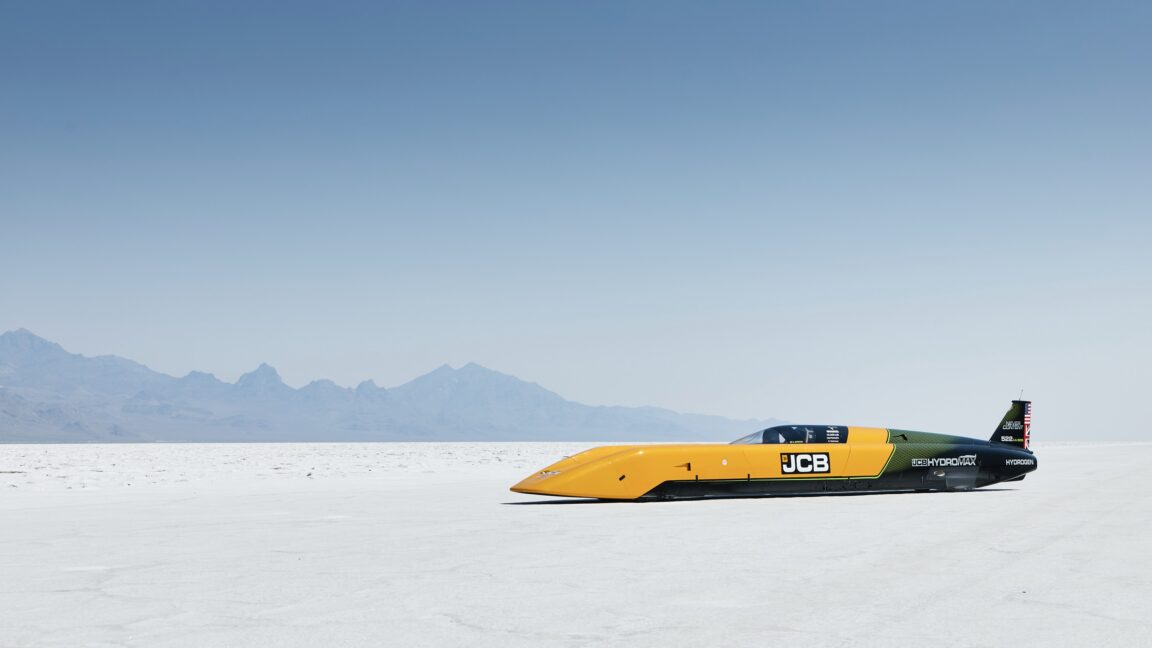

JCB has achieved a remarkable milestone in automotive engineering with its new hydrogen-powered vehicle, the JCB Hydromax. During a recent event at Bonneville Salt Flats, the Hydromax reached an astounding speed of 406.320 mph (653.91 km/h), shattering the previous land speed record for hydrogen combustion vehicles.
The Hydromax is powered by two tuned hydrogen engines, each delivering a breathtaking 800 hp (597 kW). These engines have undergone extensive modifications to enhance performance, including a significant increase in engine speed to 3,800 rpm. Notable upgrades such as replacing pushrod valves with double overhead camshafts, direct fuel injection at higher pressures, and weight reduction strategies have been implemented to maximize efficiency and power output. The cooling system has also been meticulously designed, featuring ice tanks that bring the air temperature from the turbocharger down from 392° F (200° C) to a mere 50° F (10° C).
Record-Breaking Speed
Behind the wheel of the JCB Hydromax was RAF Wing Commander Andy Green, a veteran in the realm of record-setting speeds. Green previously drove the Thrust SSC to break the sound barrier in 1997 and set a diesel-powered speed record in 2006 with the JCB Dieselmax, which reached 350 mph (563 km/h). He was also set to drive the Bloodhound project.
With a combined output of 1,600 hp (1,193 kW) and a torque of 2,600 lb-ft (3,525 Nm), the JCB Hydromax made impressive runs, clocking 400.623 mph (644.74 km/h) in one direction and achieving 412.135 mph (663.27 km/h) in the opposite run. The average of both attempts solidifies a new standard in the realm of hydrogen-powered vehicles.
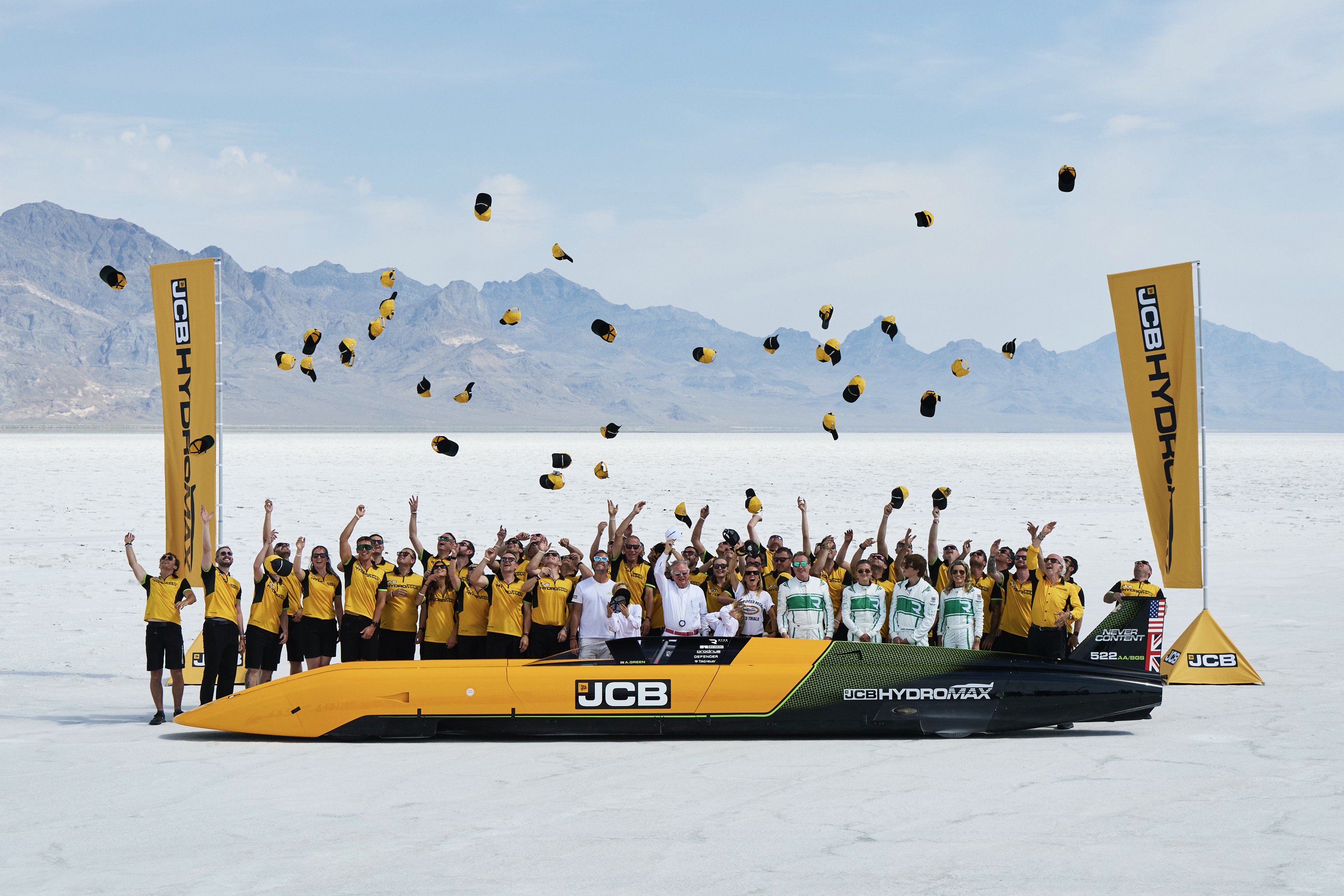
Credit: JCB
A jubilant team celebrates a new world record. Credit: JCB
This speed not only surpasses the previous hydrogen combustion record of 185.5 mph (298.53 km/h) set by the BMW H2R in 2004 but also exceeds the record for hydrogen fuel cell vehicles at 303 mph (488 km/h) held by the Venturi Buckeye Bullet 2 in 2009. Additionally, it outstrips the electric vehicle land speed record of 341 mph (549 km/h) set by VBB3 in 2016. However, the fastest wheel-driven record is still held by the Challenger II, which reached 449 mph (722 km/h) in 2018.
Green commented on this groundbreaking achievement, stating, “Bonneville is the spiritual home of the world land speed record, and JCB Hydromax has just written itself into that history. The car was terrific—stable, strong, and fast. Setting a world land speed record with hydrogen power, twenty years after Dieselmax, is a huge privilege. This record is a huge achievement by a world-class team and superb technology.”
Editor’s Take
This groundbreaking advancement in hydrogen-powered technology demonstrates significant potential for the future of sustainable transportation. As the JCB Hydromax sets new speed records, it challenges traditional paradigms and showcases hydrogen’s viability as an energy source. This achievement could spur further innovations in the automotive sector, encouraging companies to explore alternative fuels and technologies that align with environmental goals.
Source: arstechnica.com